Sunday 25 November 2012 at 14h00
Strasbourg

20260415171813.png)
20260415174541.png)

20241030101840.png)

20241030100136.png)
20241211114307.png)
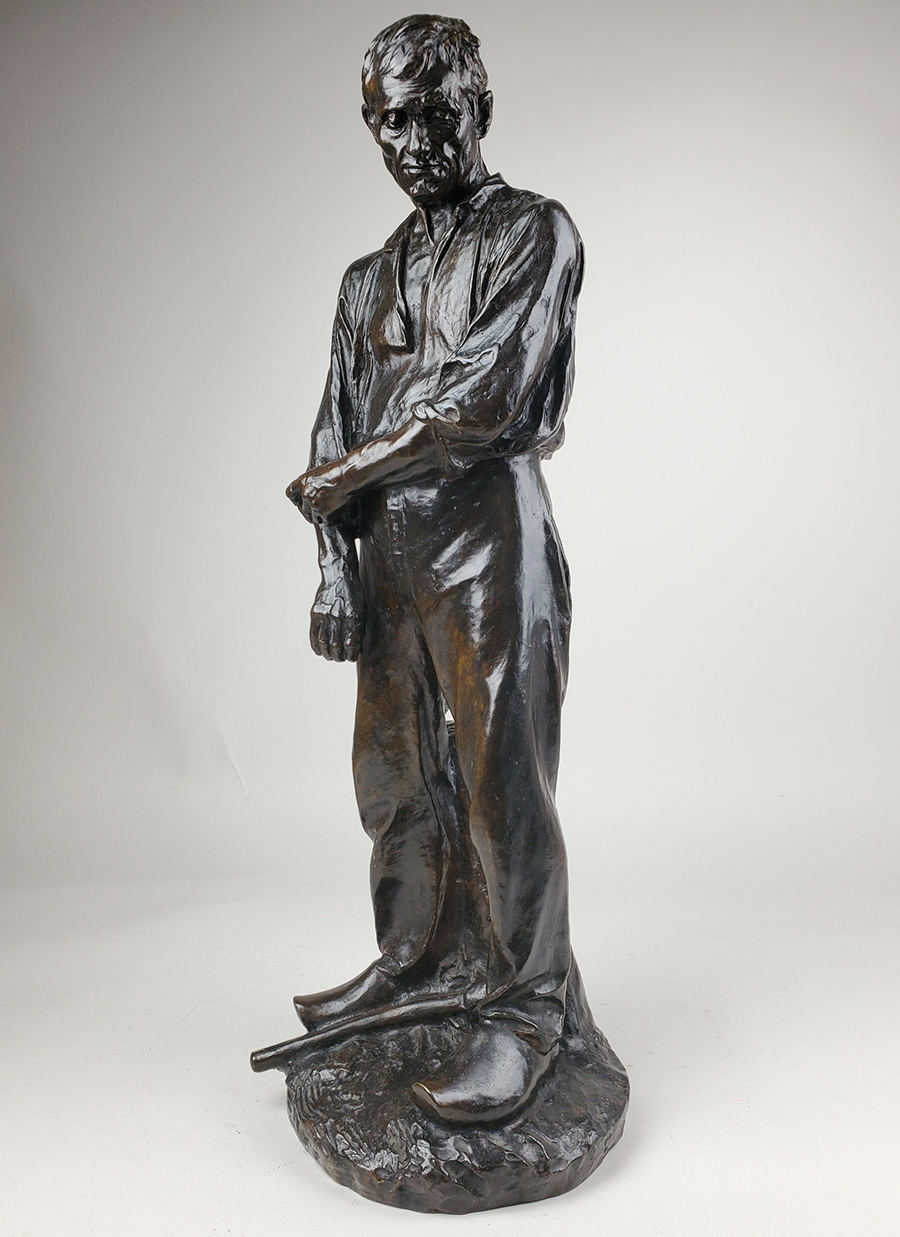
Aimé-Jules Dalou (1838-1902) trained at the École des Beaux-Arts in Paris.
In his early years, he worked with renowned ornamentalists and gained experience on the major building sites of Paris. He created the sculpture Le Triomphe de la République, located on the Place de la Nation in Paris. This group represents the triumphant Republic, surrounded by figures symbolising Labour, Justice and other Republican allegories. He produced several other monumental works, including sculptures for the Panthéon in Paris and the tomb of the Maréchal de Saxe in Strasbourg.
Jules Dalou is often associated with the realist movement. He highlighted the working class, neglected by artists at the time, by using his talent to express the truth of man's condition during his long days of toil. With our ‘Farmer’, Dalou depicts a scene from ordinary life, but gives it a profound meaning. We see a man with marked wrinkles and a bent back. His shirt seems saturated with perspiration, and the creases in his trousers show great wear. His wooden clogs are sinking into the ground. Everything about this man exudes strength and self-sacrifice in the face of his task. Dalou, thanks to his technical mastery and deep social and political commitment, bequeathed to posterity an image of France that had hitherto been overlooked.
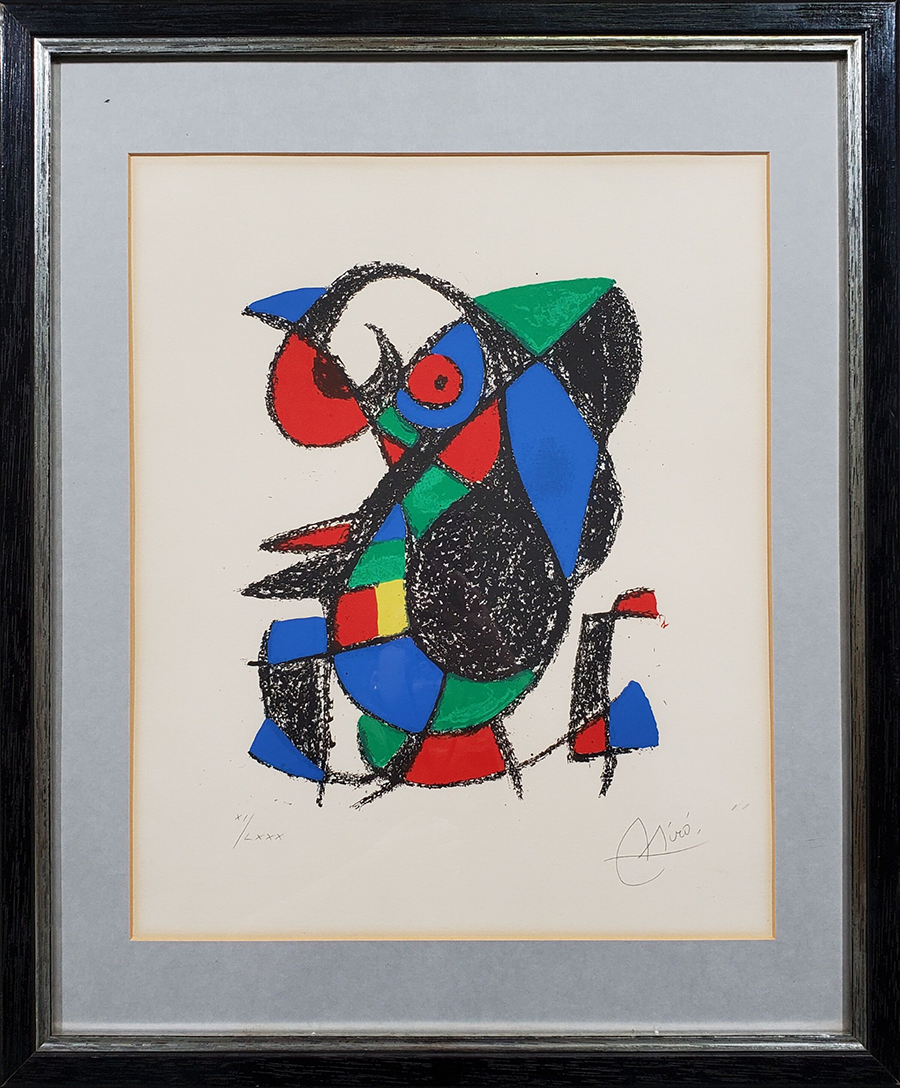 Joan Miró (1893-1983)
Joan Miró (1893-1983) was a painter, sculptor and ceramist from Catalonia.
He is an artist often associated with Surrealism, although he developed a unique and personal style. He began his artistic training in Barcelona, where he studied at the School of Fine Arts.
His early works show an influence of Fauvism, Cubism and a connection with Catalan culture. In 1920, he moved to Paris, where he met artists and intellectuals. This period marked the beginning of his evolution towards a more abstract style.
His work is abstract, characterised by organic forms, fluid lines and bright colours such as blue, red, green and yellow.
In our ‘Composition’, Miró achieves a luminous effect with a single touch of yellow.
It is thanks to his science of colour that he was able to create his own visual language.
His work has had a profound impact on generations of artists, particularly in the development of Abstract Expressionism.
Through his use of form and colour, Joan Miró developed a new way of understanding the world around us.